Posts

Showing posts with the label dog

Breaking Up a Dog Fight

Image
If you own a dog, there is a good chance you will at some point have to break up a dog fight. Especially, if you often take your furry friend to the dog park . Dog fights can be scary and can result in injury to you or your dog if you are not mentally prepared to deal with one. The worst thing you can do is A) Scream at the top of your lungs. This only escalates the situation. B) Grab a dog's head and/ or neck area. This will result in you getting bit. and C) Keep a hold of the leash, if your dog has one on. This will result in entanglement and possible injury to one of the parties involved. If your dog has a leash on and is in a fight, the best thing you can do is immediately drop the leash. So, what should you do if you happen to find yourself in the middle of a dog fight? First and foremost, keep your cool. Next, here are some helpful tips: When it comes to dog fights, the best thing to do is recognize the situation before it arises by knowing how dogs communicate. Usually,...

Dogs: Bringing A New Baby Home

Image
  When you bring a new baby home, everything changes. There will be new smells, new routines and a new human being! This can be incredibly overwhelming for our canine family members. Especially, if they were never introduced to babies or small children as a puppy. Dogs, like humans, need time to adjust to the changes, but there are things you can do to help your furry family member transition: 1. Provide your dog the space-- mentally & physically-- to adjust to the new baby: The crate is your dog's best friend. Remember, that dogs are naturally den dwellers. The crate should be your dog's sanctuary & should never be used for punishment. Additionally, when your children are older-- crawling age and up--there should be a non-negotiable rule: Absolutely no (human) children inside the crate. A crate is a place for the dog to escape & find serenity in all the chaos of family life.  2. Before The Baby Arrives-- Train, Train, Train: Teach and/or review basic commands bef...

Canine Head Shaking

Image
 Head shaking in dogs is normal as long as it is infrequent. Dogs will naturally shake their heads to get something out of their ear (like a seed or bug) and usually, it is quite effective. BUT, if your dog starts to shake their head more frequently and it is persistent for more than a day and repeatedly, it is time to take your dog to the vet.  Frequent head shaking can be caused by: Bacterial & Yeast infections Allergies Water in the ears A foreign object in the ear canal Inflammatory diseases Neurological disorders If you notice your dog shaking their head repeatedly for more than a day, it is time to visit the vet. Continued head shaking can lead to ruptured blood vessels within a dog's ear flap (aural hematoma) which requires surgery. 

Hiking Trail Etiquette for Canines

Image
Trail hiking with your dog is not for the weak. If you and your dog are not properly armed with knowledge, training and equipment for hiking on a trail, bad things can happen. Before I list out the etiquette portion of this blog, I will first list out the preparations you need to make before you hit the wild. First and Foremost-- Is your dog even capable to hike a trail? Age: It is highly advised to take your dog's age into consideration. Puppies should hike for less than an hour. Elderly dogs joints, health and stamina should be considered. If you are going to take an elderly dog or puppy on a hike, please check with your veterinarian first and follow their guidelines. Dogs with a high prey drive or are highly excitable: It is recommended that these dogs do not take hikes without a leash and have gone through rigorous obedience training. The wilderness offers a lot of stimulus-- wild life smells and the new terrain can cause your sensitive pup to go into overdrive. Remember: a ...

How To Train Your Dog Not to Jump on People

Image
Training your dog not to jump on you and other people is a hard one, because it goes against their natural instincts. Dogs greet other dogs nose to nose. When your dog is jumping up at you in greeting, it's because they are trying to reach your nose! But, what can start out as cute puppy behavior, can become downright dangerous if not dealt with at the beginning. Dogs that jump up on people can cause serious injury. What can start with a mild scratch or bruise can turn into someone getting knocked down. So, it's best to nip that behavior in the butt right away. The first thing you need to do is manage the situation. If your dog is not quite up to par on sitting and/or not jumping, and you are still working on it, find a way to  "avoid" the situation when visitors are coming over. Some alternatives to having your dog jump on people: Crate Put your dog in another room Restrain your dog on a leash Even if your visitor says they don't mind your dog jumping...

5 Steps for Canine Heart Health

Image
Heart disease affects dogs differently than humans. A heart disease that is more common in humans-- coronary artery disease-- is quite rare in dogs. What is more common in dogs is congestive heart failure, which is the weakening of the heart muscle. But, there are steps you can take in order to help maintain your dog's heart health: Diet : Your dog needs a balanced, high-quality food. Period. They key is to research and figure out what kind of diet is recommended for your dog's breed. Yes, different breeds need different diets. If you are going the kibble route, it's always wise to research whole foods that can be mixed into your dog's kibble. It is also important to keep your dog's weight in check. Obesity puts a great strain on a dog's heart. So, maintaining an ideal weight is key.  Cardio Exercise : One way you can keep your dog's weight in check is with regular cardio exercise. Not only do dogs love it, but it also strengthens the heart muscles. P...

Caring For a Pregnant Dog

Image
 Is your dog pregnant? Or maybe you think your dog could be pregnant. Or maybe, you are considering breeding? Whichever is the case, you need to be prepared to give your pregnant dog the love and special care she needs while she is busy growing puppies in her belly. Here is a list of ways you can support your pregnant dog as she prepares for whelping (delivery): Signs that your dog may be pregnant: Increased appetite Weight gain Increased nipple size Swollen belly Tires more easily Nesting behavior More affectionate Irritable Keep in mind that all of these signs could also be different medical conditions other than pregnancy. You must go to a veterinarian to determine if your dog is pregnant or it is something else.  How to tell if your dog is pregnant: You have noticed the signs stated above and are taking your dog to the vet to determine pregnancy. A dog's pregnancy only lasts about 62-64 days depending upon the breed. The sooner you bring your dog to the vet, the better. Th...

Diet: Why a Healthy Weight Matters for Canines

Image
Pet weight- it's a big deal! Not only will your pet's weight affect your pocket book in the way of veterinarian bills, but it also plays a huge role in the quality of life your pet is living. According to a 2016 survey by The Association for Pet Obesity Prevention, 54% of all dogs in the U.S. are overweight or obese and 93% of pet guardians thought their dog's weight was normal. How I read that statistic is that a lot of humans out there have an overweight dog and think their dog is normal. So how can you tell if your dog is at a healthy weight? Feel your dog's spine and ribs. If you are having difficulty feeling the spine and ribs, Fido is overweight.  From a side view, a dog's stomach should be raised. It should not be sagging. From an upward view, you should be able to see a "waist", an inward curve, between the back of the ribcage and the hips.   Having an overweight dog greatly affect their health: They have a shorter life expectancy, there i...

What To Do When Your Dog Vomits

Image
Let's face it, if you own a dog or cat, you are used to vomit. Usually when an animal throws up, it is benign-- your animal is trying to expel something unwanted from their stomach. But when the throwing up suddenly becomes unrelenting, it could be a sign of a serious condition that ranges anywhere from head trauma, toxin exposure, obstruction, cancer or a myriad of other conditions that a veterinarian will need to diagnose. So how are you to tell when it's time to go to the vet? Let's look below: First you need to decide if your dog is vomiting or regurgitating food: Pay close attention to these signs in order to easily tell your veterinarian for a quicker diagnosis. Whether it is vomiting or regurgitation, if it is happening frequently, you should probably seek a vet. If it is not frequent, then you can administer these steps: Do not give your dog food and take away the water bowl for 12-hrs after "the incident". Give your dog ice cubes to lick or...

Potty Training Your Puppy

Image
Whether you just adopted a puppy or an adult dog, chances are you are going to have to house train your dog to do the business in the appropriate place. For most dogs, it will take 4-6 months to a year of diligence to potty train. But, depending upon your new dog's previous living conditions and already developed habits, it could take longer or they could already be trained! If you have a straight out of the womb puppy, you will need to begin potty training at about 12-16 weeks. Whatever the scenario, you are going to need: consistecy patience positive reinforcement When you first bring your new addition to the house, limit where he/she can roam. This will give you a more controlled environment and give your dog less options to use as a toilet. Then, follow these steps: Dog language for using the bathroom: Whining Circling Sniffing Barking and Scratching at the door  As training progresses, you can offer more freedom for your furry family member to roam aroun...

10 Signs Your Dog is Stressed

Image
Stress... Ughh. We all get stressed. As humans, we know that familiar feeling of strain or pressure that slowly creeps up on us. And, we have figured out ways to reduce our own stress (hopefully!). Prolonged stress can wreak havoc on our health and well -being. Our canine companions can also feel stress. Just like us, they need ways to reduce their stress or the body will respond through illness and disease. Unfortunately, we humans don't speak dog and dogs don't speak human. It's up the the canine owner to recognize the signs your dog is exhibiting through "dog language" that they are stressed. To recognize the signs of stress in your dog, you must first know your dog's baseline behavior and body posture. Often, stress cues in your dog are very subtle and can mimic normal behaviors. It's up to you as the human to know your dog's normal communication behaviors and then differentiate when something is off a bit: Pacing and Shaking : Dog's wil...

Can I Over Exercise My Dog?

Image
  Mental and physical health is essential to everyday life. But, how do we know if we are overdoing it and it is becoming an unhealthy compulsion? We have all heard of humans over exercising, which in turn causes mental fatigue as well as injuries. Dogs too can be over exercised from the well intentions of human companions. So, how do we know if we humans are over doing the daily exercises with our dog? It's complicated. The first thing is to know your dog through observation of your dog's personality, research on breed and regular veterinarian visits. Daily requirements for exercise are based on breed, weight, age, size and the temperature outside. A Basset Hound or Bulldog are not going to require as much exercise as a Chocolate Lab. In fact, too much or high intensity exercise for the former breeds could cause serious medical issues. Overweight dogs will need a special exercise program to slowly take off weight while protecting the joints. As your dog ages, exercise regim...

How to Crate Train Your Dog

Image
  Often, people don't crate train their dogs because they view putting their dog in a crate as a punishment. This could be because we humans view it as a cage--a jail. Or, it could be because we do use it as a punishment for our dog when they have become mischievous. But, these are all human attributes we are assigning to our dog. The fact is, dogs are naturally den animals and enjoy small enclosed places. A crate can be a place of security that calms a dog's anxiety. The key is not to accidentally train your dog into thinking of it as a negative space because you use it as "punishment" for dog behaviors you don't want to deal with or haven't trained your dog not to do.  A crate should be a place your dog is naturally inclined to want to use to relax. So, how do we do that? 1. A crate should be the right size. You will need to find a crate that not only fits your lifestyle, but fits your dog. Buy a crate that is the adult version for the specific breed of your...

Caring For Giant Dog Breeds

Image
Giant dog breeds are any dog that will eventually weigh 100 + pounds. Though giant dogs are majestic to look at, they do require special care in order to ensure they live a relatively long, healthy life. If you noticed I used the word "relatively" in the last sentence, it's because in comparison to a regular sized dog, giant dogs have a shorter life span-- 6 to 10 years in comparison to the average 12 to 15 years of a "regular" dog. If you are considering adopting a giant dog, here are the "ins and outs" of care: Typically, giant dogs are very gentle, affectionate and loyal. They make great family pets. BUT, they must, must, must be trained and socialized starting at puppyhood. Otherwise, your gentle giant could end up a bulldozer which equals injuries for all living creatures in the vicinity. The good thing is that gentle giants are generally very trainable. Once they get older, their energy level decreases and they don't require as much exe...

How To Tell If Your Dog Is Depressed

Image
Dogs can suffer from depression, just like humans. But, dogs do not speak human. They speak dog and sometimes it's hard for us humans to figure out what they are saying. Here are 10 signs that your dog might be depressed. Please keep in mind that just because your dog may be exhibiting one of these signs, it does not necessarily mean they are depressed. A lot of these signs could also mean they are injured or sick. Bottom line, it's best to know your dog's personal language. Pay attention to how they communicate on a day to day basis in order to understand when your dog is acting out of the ordinary. Change in Behavior : This is the most basic sign. Is your dog acting out of the ordinary? Have they lost interest in things that used to excite them? Example: Walks, favorite food, no longer greeting you at the door. The first thing to do is check out the environment. Have you had a new life change (new baby, a big move, ect..)? Sometimes, a dog will sense your own mood an...

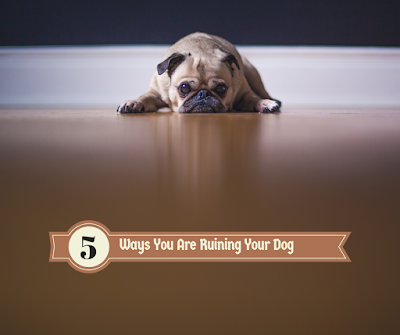
5 Ways Your Are Ruining Your Dog

Image
I've already written about 8 Things That Drive Your Dog Crazy , Top Ten Rules For Children Around Dogs and Why Socializing Your Dog With Other Dogs is Important . All of these are important topics to raising a well-rounded, balanced dog. But, one topic I have yet to write about are human behaviors that are downright ruining the dog. There are many of these behaviors, but I will just focus on the five most prevalent: Yelling at an aggressive / barking dog : This just doesn't work, because your dog doesn't speak human. Dogs that are barking excitedly or fearfully are stressed out. When you yell at them while they are barking, you are just adding to the stress which ultimately leads to more barking. They basically think, "Oh, hey! Now I have my human barking too! Yes!" A better idea is to distract your dog from whatever is causing the barking with their favorite game. OR, even better, teach your dog how to bark on command. I know this seems counter intuitive, ...

Canine Yeast Dermatitis

Image
 Yeasts are a eukaryotic, single -celled microorganisms that fall under the fungus kingdom. They are normally present on the skin and in the body-- particularly in the gut where it helps to digest food. Generally, yeast does not cause illness. Yeast Dermatitis, however, is an infection on the skin or ears when there is an abnormal overproduction. It usually occurs in the ears, paw pads or skin folds and is itchy, red and irritated. If left unchecked and without treatment in the ears, it can lead to deafness.  Symptoms: Red irritated skin Itching & scratching The appearance of dark pigmented skin Flaky or scaly skin Sores on the skin Musty Odor Changes in skin texture (aka: elephant skin) Hair loss, bald patches Head tilting and shaking the ears Hearing loss Common Causes: An under active or over active immune system Allergens Food high in sugar & carbs Heat & humidity Poor hygiene Trapped moisture Frequent bathing Swimming A trapped object in the ear, ear wax or d...

Understanding a Dog's Senses

Image
Humans and dogs have the same senses: hearing, touch, sight and smell. But, it pretty much ends there in regards to equality. A human generally uses their senses in this order: hearing--> seeing--> smelling--> touch. Whereas a dog uses them in this order: smelling--> seeing--> hearing--> touch. In this post, I am going to break down each sense and describe the variations between a human and a dog. The Nose:  A dog's brain is about 1/10 the size of a human brain, BUT the part of the brain that controls smell is about 40 times larger in a dog than human. Pretty impressive, right? Depending upon the breed, A dog's sense of smell is 1,000- 10,000,000 times stronger than a human's. Dogs have about 125-300 million scent glands compared to a humans measly 5 million. Dogs can smell things that humans can't even fathom.... like emotions. We humans usually rely on our sight to tell us the subtle clues of how a person is feeling. Though, we can easily be t...

Purebred vs. Shelter Adoption

Image
The time has come where you are thinking about adopting a dog into your family. One of the big decisions is whether to adopt a shelter dog or a purebred dog. There are pro's and cons for both sides and some individuals can have very strong opinions one way or the other. I am going to lay out the basic pro's and cons for both sides in Layman's terms without veering into the opinion category. Basically, what it all comes down to is genetics. A purebred dog will have a high chance of being predictable in behavior and physical appearances. After all, that is the whole philosophy of breeding animals. Certain dogs are "hardwired" for certain work behaviors and energy levels. If you are going to adopt a purebred, you must make sure you DO YOUR RESEARCH on that specific breed and provide a living environment that caters to their genetic tendencies. Purebred dogs also will have a higher likelihood of having health problems. The genetic breeding for physical appearanc...

Common Canine Poisons (and what to do)

Image
We all try our very best to keep our dog happy, healthy and safe. But, did you know that there are more than 100,000 cases of pet poisoning in the US each year? Many of these poisonings happen with everyday items that we humans use and don't really think about in regards to pet safety. Here is a list of the most common household items that cause canine poisoning: Common Human Foods : Foods like chocolate, xylitol, grapes, etc... can be toxic to you dog. Before you feed your dog any human food, please do your research on what is and isn't toxic for your pet. Just because humans can eat it, does not mean a dog can safely ingest. Insecticides : This could be a mosquito spray, bait stations or even flea/ tick treatments. Please be aware of what is within your dog's reach or what you spray onto their fur. Licking off these insecticides could can be toxic. Mouse and Rat Poison : Aside from just eating the poison, ingesting a rodent that has been poisoned can also be toxic...