Posts

Showing posts with the label training

Five Puppy Behaviors to Nip in the Bud Early
Image
   Puppies are highly receptive to learning the first 16-weeks of their lives. But that doesn't mean a dog older than 16-weeks cannot be trained. To foster a well-behaved adult dog, it's crucial to address specific behaviors in puppies early on. Here are five of behaviors you should consider focusing on early in your dog's life:  Chewing:  Puppies will chew on things for a variety of reasons. Just like a human baby, your puppy may be teething and chewing on things provides relief. Another reason is that your puppy is bored and looking for exploration. To help your puppy, provide lots of chew toys & redirection when chewing on an unacceptable item. In addition, you will want to make sure your puppy is getting enough exercise-- physical and mental-- to allow their natural tendency to explore to be satisfied.  Biting:  When dogs play, they naturally nip at each other, and usually will let a play partner know when play is becoming too rough. One way a ...

Teaching Your Dog "Stay"

Image
Teaching your dog to "stay" is a handy skill when you are doing something and you don't want your four-legged friend all up in your business (or if you want to take cute photos of your dogs sitting politely on a tree stump). Safety wise, it's also one of the primary commands your dog should know. Before we begin on the actual steps, there are a few things you need to decide: Are you going to have your dog sitting or laying down when they "stay"? The more comfortable your dogs is, the longer they will actually stay. Example: sitting position will require more effort, but laying down may make your dog feel vulnerable. You need to assess the situation and your dog's temperament to decide what will be the best.  You need to decide on a "release" cue. This will be a word or action that tells your dog they no longer need to stay. When choosing a word, try to choose one that you do not use in everyday conversation. Otherwise, you may end up conf...

How To Stop Your Dog From Barking in Four (patient) Steps

Image
Whether it's the mailman, the neighbor walking his dog by your fence or a deer in your back yard, excessive dog barking can bring anyone down to their knees in frustration. Here are four steps you can take to bring a little peace and quiet into your home: Make sure your dog is exercised . A lot of doggy mischief can be avoided by simply making sure your dog is properly exercised, mentally and physically. When your dog has extra energy, he needs to find an avenue to release it. He's bored! This results in behaviors we owners may not find endearing. By making sure your dog is getting physical and mental exercise everyday, you are releasing that pent up energy and helping your furry friend live a balanced life.    Stay Calm . You are not helping the situation by yelling "STOOOOPPPP!!!!" or "KNOCK IT OFF!". Remember, dogs do not speak human. If you are yelling at them, all they hear is you barking along with them. They think everyone is joining in on the ...

How To Train Your Dog Not to Jump on People

Image
Training your dog not to jump on you and other people is a hard one, because it goes against their natural instincts. Dogs greet other dogs nose to nose. When your dog is jumping up at you in greeting, it's because they are trying to reach your nose! But, what can start out as cute puppy behavior, can become downright dangerous if not dealt with at the beginning. Dogs that jump up on people can cause serious injury. What can start with a mild scratch or bruise can turn into someone getting knocked down. So, it's best to nip that behavior in the butt right away. The first thing you need to do is manage the situation. If your dog is not quite up to par on sitting and/or not jumping, and you are still working on it, find a way to  "avoid" the situation when visitors are coming over. Some alternatives to having your dog jump on people: Crate Put your dog in another room Restrain your dog on a leash Even if your visitor says they don't mind your dog jumping...

Top 10 Rules for Children Around Dogs

Image
Cute picture of the child hugging the dog, huh? But, it is images like these that compel me to write a blog about teaching children rules for being around dogs. There are certain elements of respect that we would give humans that also should be given to dogs. If we follow these rules, accidental dog bites and injuries should be kept at bay: Do not hug a dog. Yes, humans like hugs, but dogs don't and dogs are not humans! Hugs make dogs nervous. Dogs can be trained to tolerate hugs, but it's not really their cup of tea and they would rather you stay out of their personal bubble.  No Running. Children must be trained not to run up to a dog. This could startle or scare the dog. In addition, children should not run in front of a dog even while playing with the dog. This could trigger the prey instinct in a dog and will often result in a child getting nipped in the butt or getting knocked down and bitten.  Don't touch body parts. Dogs should be pet from head to the base ...

Puppy Biting 101

Image
You just brought home a bundle of fuzziness that slept all day, but now this furball is running around, nipping, jumping and biting. OUCH! As a human, our first reaction is to think that this puppy is naughty and going to become an aggressive dog if we don't do something....and fast! Although, yes, biting needs to be dealt with, it does not necessarily mean you have a "bad apple". It means your puppy is in fact a canine. Puppies bite for a number of reasons: They could be teething and the biting action is relieving the itchiness of their teeth coming in. They are also learning how to play. If you watch puppies at a young age play in a pack, they bite. As they get older and their litter mates teach them that biting hurts through a yelp or cry, a puppy soon learns to be gentle. Puppies will also bite to get your attention, and it works! On the flip side, a puppy may bite if they are sick, hurt or just not socialized correctly. It is extremely important to pay attention t...

Canine Food Obsession

Image
One thing you can always assume about a dog is that there is a 99.99999% chance they will never turn down food. True, there are some dogs that are a little more mature about mealtime than your average gobbler. And, some will walk away from a bowl when they are genuinely full. But, there are some dogs that are completely obsessed with food and act like they are starving to death all the time. If you have a food obsessed dog, the first thing you must do is take them to the vet to rule out a serious medical condition. Here are some of the physical reasons your dog may seem obsessed with food: Aging Bacterial overgrowth in the intestines Cushing's disease Diabetes Exocrine pancreatic insufficency Hyperthyroidism Reaction to medication Inappropriate diet Once you have ruled out a medical condition, you may start to deduce that your dog's food obsession is psychologically based. There is a theory that dog's are opportunistic eaters with a hereditary trait from thei...

Training: "Leave it" in 5 Steps

Image
"Leave it" is a training skill that could potentially save your dog's life. Before you start to train your dog on how to leave something on the ground, it's best that they have already mastered "sit" and leash walking . Below, I have outlined how to teach your dog how to "Leave It", but first I would like to explain how to go about teaching your dog this skill: 1. Only teach your dog a new skill for about 15 minutes a day in 5 minute sessions. "Leave it" is a good skill to practice during commercial breaks. 😏 If you go all hard core on the training and do more than 15 minutes a day in 5 minutes sessions, you risk over saturating your dog and stressing them out.... or they will just become plain ol' bored with the task and not listen to you. 2. In my steps, you will see "P/R". This means "Praise and Reward". Praise= a "good job" or "good boy/girl!" with lots of happy enthusiasm. Reward= a tr...

Dog Breed Personalities

Image
In the past, I have written about choosing a pure bred vs. a shelter dog , how to choose a shelter dog and how to choose a dog breeder . But, I have yet to write in  more detail about dog breed personalities and traits. I am not saying that every individual dog of a specific breed is basically a clone of another of the same breed. As all dog owners know, individual dogs will have their own quirky personality specifically for them. What I am saying is that when choosing a dog breed, you must know historically why that dog was bred. Once you have that gem of knowledge, understanding why your dog does what it does will help you ease a lot of training frustrations. After all, some things may just be a bit more hardwired into your dog than you think. There are seven main dog breed groups in the dog world: Herding, Hound, Sporting, Terrier, Toy, Working and "non-working" (Basically, anything that doesn't fit into a nice tidy category). I provided examples of breeds for ea...

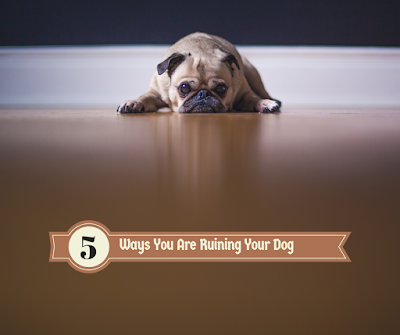
5 Ways Your Are Ruining Your Dog

Image
I've already written about 8 Things That Drive Your Dog Crazy , Top Ten Rules For Children Around Dogs and Why Socializing Your Dog With Other Dogs is Important . All of these are important topics to raising a well-rounded, balanced dog. But, one topic I have yet to write about are human behaviors that are downright ruining the dog. There are many of these behaviors, but I will just focus on the five most prevalent: Yelling at an aggressive / barking dog : This just doesn't work, because your dog doesn't speak human. Dogs that are barking excitedly or fearfully are stressed out. When you yell at them while they are barking, you are just adding to the stress which ultimately leads to more barking. They basically think, "Oh, hey! Now I have my human barking too! Yes!" A better idea is to distract your dog from whatever is causing the barking with their favorite game. OR, even better, teach your dog how to bark on command. I know this seems counter intuitive, ...

Staff Training

Image
Owners are often relieved when their dog(s) pass the temperament screening test and are allowed to participate at a doggy daycare. But, the question that most owners do not ask the daycare is whether or not their staff is trained to handle a large group play structure. At Bark City, our staff is trained through "The Dog Gurus" program . Today, I would like to share with you a bit of their promotional material! This is the staff training program that we make all of our staff study. You could say they are enrolled at Bark City University... These are the two founders of "The Dog Gurus" and their credentials: Robin Bennett is a Certified Professional Dog Trainer who founded one of the largest dog training companies in Virginia. Her first book,  All About Dog Daycare  is the number one reference on opening a dog daycare.   Susan Briggs owned a large pet care center in Houston, TX for  12 years and was an early pioneer of dog daycare se...